Stranger Things is more than a sci-fi thriller; it's a beautiful blend of mystery, friendship, nostalgia, and raw human emotion. Spanning 10 years, 5 seasons, and 42 unforgettable episodes, the series takes us on an extraordinary journey through the small town of Hawkins, where ordinary lives collide with terrifying and magical realities.
The storytelling is gripping, perfectly balancing suspense and horror with heartfelt moments that make you deeply connect with every character. The true strength of the show lies in its characters—the unbreakable friendship of the kids, the courage found in unlikely heroes, and the emotional growth we witness over the years. The 80s setting adds a nostalgic charm, while the music, visuals, and supernatural elements make every season profound, transformative and vulnerable.
This series is more than just a show; it’s an emotional journey that grew alongside us.
The unexpected emotional hit
Watching the series finale in theaters on NYE was special, communal, and unforgettable. I remember I was equally SO excited yet so nervous. I was worried which of my beloved characters would die in the epic final battle. I was expecting all of the action and adrenaline, yet not the poignant emotional aftermath.
NYE 2025 was amazing. I watched the finale in theaters with my friends and family, then went bowling with my friends and sister, then we all gathered at my house with the rest of my family to celebrate 2026 at midnight together. It was honestly a perfect NYE!
But New Year’s Day is when it all began..and at 3am in the morning, mind you. I had terrible nausea all night and all of New Year’s Day. I didn’t know why. I just kept thinking, “Why am I anxious and sad after such a great night?” I felt a pit in my stomach. Every time I thought of Stranger Things, I got butterflies in my stomach. I felt a deep wave of sadness ripple through me. I kept crying. I felt soooo emotional.
What is wrong with me? Why am I grieving over a fictional show? None of this makes sense.
However, I realized that the Stranger Things finale was a big emotional trigger that I didn’t know I needed.
“It’s just a show”… except it wasn’t
Stranger Things ran for 10 years. I wasn’t even 20 when it came out. I was still deep in college. Life still felt very childhood-like. Life felt very safe, comforting. I was in school. I had so many friends that I would see daily, because that’s the joy of college, right? I’d come home for break and see so many of my childhood and high school friends, because we were always on break together. It was quite wonderful.
I always watched Stranger Things with friends and my family. We would be so excited when a new season came out! We would literally book out our days (evenings) to all watch together. We all grew so close with the characters. We would see bits and pieces of ourselves with each of them.
It’s remarkable how fiction can feel so personal, and I think it’s because it attaches itself to real memories. These episodes and seasons became markers of time in my life. Looking back, I can see how each season seemed to mirror what was happening in my own life at the time.
Season 1 (2016): I was at the beginning of my college journey, making new friends and adapting to a whole new lifestyle.
In Stranger Things: The kids were beginning a whole new journey of battling terrifying and supernatural realities. Their lives would forever be changed. New friendships and relationships formed, and the main circle of characters had to greatly adapt to a new, complicated life.
Season 2 (2017): Middle of college — I was navigating studying abroad, internships, and trying to figure out how to balance independence with responsibilities. Everything felt new and sometimes overwhelming.
In Stranger Things: The kids were adapting to new challenges after the first season’s events. Their lives were more complicated, their friendships tested, and they were learning how to face bigger, scarier realities. Like me, they were figuring out how to step into a more complicated world while still holding on to what mattered most — their friends and sense of self.
Season 3 (2019): I had just graduated college! Honestly, I felt very unsure about what to do next. Moving back home, figuring out my next steps, and trying to “adult” was… well, tough. Nothing felt super clear, and I was figuring out how to navigate a whole new stage of life.
In Stranger Things: The kids were high schoolers now. They’d “graduated” from their childhood games and were starting to face more adult-like challenges — dating, responsibilities, and figuring out who they were. Even the older siblings were trying internships and jobs, just like I was in real life. And yep, the real world was still tough for them too.
Season 4 (2022): Well… the pandemic happened in 2020, and those were some very scary and uncertain times. Job searching was hard, so I decided to take the opportunity to start a new adventure: going back to school to get my Master’s. Once again, it meant new friends, adapting to a new place, learning how to “live like an adult again,” and navigating mental health struggles along the way. Still, it was really special watching Season 4 with my graduate school peers — it felt communal in a way I didn’t even realize I needed at the time.
In Stranger Things: The stakes kept getting higher and higher — which honestly reminded me a lot of life during peak pandemic times. Mental health became a huge, underlying theme this season, with characters grappling with depression, anxiety, grief, and fear. Season 4 really explored how powerful our mindset and inner thoughts can be — how they can either make us feel completely stuck or help us find a way forward. Characters like Max felt incredibly alone and overwhelmed, and that feeling hit close to home for me. But through it all, the core group of friends — our beloved protagonists — continued to show up for one another. They leaned on each other when things felt unbearable. And in reflecting on this season, I’m incredibly grateful for the people who came into my life during grad school and beyond, who helped me through some of my hardest moments too.
Season 5 (2025, with finale on NYE): The past couple of years have been… a lot. I’ve been carrying grief from losing a best friend tragically, managing high anxiety and everything that comes with it, and trying to navigate adulthood while still living at home (iykyk). I’ve been working to nurture long-standing friendships while also making space for new ones — the very real life of a late–twenty-something.
This past year especially felt like a full-blown quarter-life crisis. I struggled with financial independence, the pressure to secure a better-paying job, and the constant mental loop of when will things settle? when will I feel okay? And in the midst of all of that, we lost our grandpa. At times, it felt like one thing after another after another. It was exhausting and overwhelming.
That said, I am slowly recovering — processing, creating, and learning how to move forward and be okay with change. And honestly? It’s really hard. But there’s a reason this season hit me the hardest, and why the finale impacted me so deeply — something I’ll dive into more shortly.
In Stranger Things: This season carries the highest stakes yet. The group is facing the ultimate threat as rifts open throughout Hawkins, and their mission becomes clear: this is the final battle. Everything feels heavier, scarier, and more uncertain. The party is anxious, afraid, and constantly bracing for what could come next — wondering if another loss is just around the corner.
Their journey is complicated, emotionally intense, and filled with grief. They experience the loss of someone deeply important to them, and it changes everything. In many ways, it feels like the characters are navigating their own version of a quarter- or mid-life crisis — questioning what comes next, who they are without what they’ve lost, and how to move forward.
And then comes the epilogue. The group must accept what has happened, move on, and begin carving out their own paths in life. They go their separate ways — not because the bond is broken, but because life is moving forward. And yet, they remain connected, bonded as friends forever. That message — of change without abandonment — is what truly stayed with me.
The finale theme that broke me (in a good way)
Closing the door on this show feels like turning the final page in a book that I never want to end. But, just as life goes on and our lives inevitably move forward, so must we continue to embark on new curiosity voyages.
In the epilogue of the finale, the “kids” graduate high school. The “teens,” now in their early twenties, are just beginning to settle into their own adult lives. To some degree, every character is saying goodbye — goodbye to childhood, goodbye to all living in Hawkins together, goodbye to seeing each other every day or living just down the street from one another.
And that’s why the finale resonated so deeply. It didn’t frame moving on as loss alone. It showed that people can grow, change, and move forward — without leaving each other behind. That kind of goodbye is painful, but it’s also hopeful. And right now, that’s exactly the kind of reminder I needed.
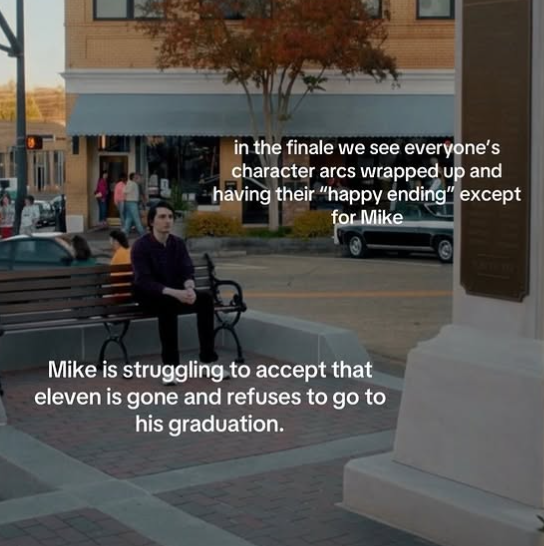
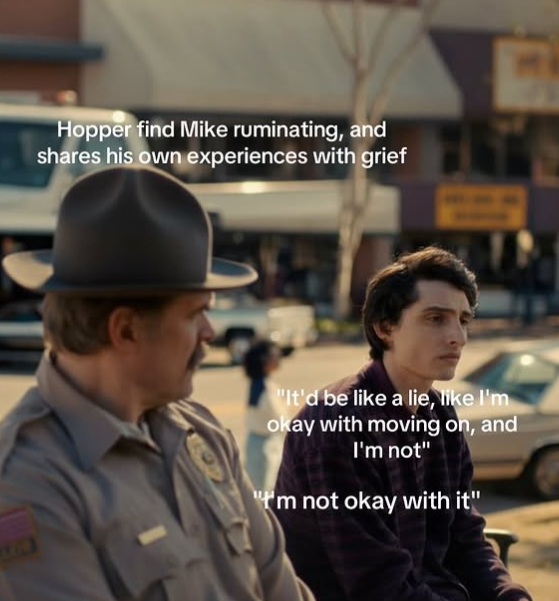
Furthermore, the characters — especially Mike — are also navigating grief. Grief not only from losing a best friend who was more like family to all of them, but also the quieter grief that comes with growing up and letting go of childhood. That kind of grief is less obvious, but just as heavy.
The real grief underneath
That ending hit me hard because I’m in a season of life where goodbyes feel like they’re happening all around me.
One of the hardest was losing my grandpa, who passed away in August of 2025. Another goodbye is approaching as I near my 30th birthday — a quiet but very real farewell to childhood. Change is inevitable. Growing older is unavoidable. And even when it’s natural, it doesn’t make it any easier.
Friends are moving away in pursuit of school or new jobs. Others are starting demanding careers, meaning we won’t see each other as often. My sister is off at school. My brother no longer lives at home. Everything feels like it’s shifting at once. There’s so much growing up happening, and honestly? I don’t love it.
It feels like I don’t want to move on — but I do. I don’t want to leave childhood behind — but I know I can’t stay there forever. I’m not fully ready, yet life keeps nudging me forward anyway.
More and more, I’m learning what it feels like to grow older and grow apart from friends — not because the love disappears, but because life expands. We each have our own paths to follow. We can’t always be together, even if we want to be.
Over the past few years, I’ve found myself grieving in many ways. Grief shows up when you least expect it, overlaps with change, and lingers in moments when you realize life will never look quite the same again.
I am not just grieving the end of a show — I am grieving the end of a chapter in my own life.
It feels like Stranger Things captured the way life moves forward, whether you're ready for it or not. Watching the characters grow up and move on made me think about my own friendships and life changes. It’s like I’m trying to hold on to things I don’t want to lose, while also needing to let go and move forward, which makes me feel anxious and sad all at once.
And I turn 30 this year, which feels so overwhelming and scary. Because in my mind, I am still that 15-year-old who feels carefree and nostalgic for the good old days, but in reality, there’s a lot of pressure and expectation that comes with “adulting.” It is like I am grieving that loss of youthful freedom and feeling the weight of how things have to shift.
The finale was like this emotional reset, and with that final sense of "moving on," I really feel the weight of it all. It’s not just about the show wrapping up—it’s about how I, as a viewer, feel the real-life parallel of growing up, shifting, and realizing how much has changed for me too. That’s what made this finale just so real.
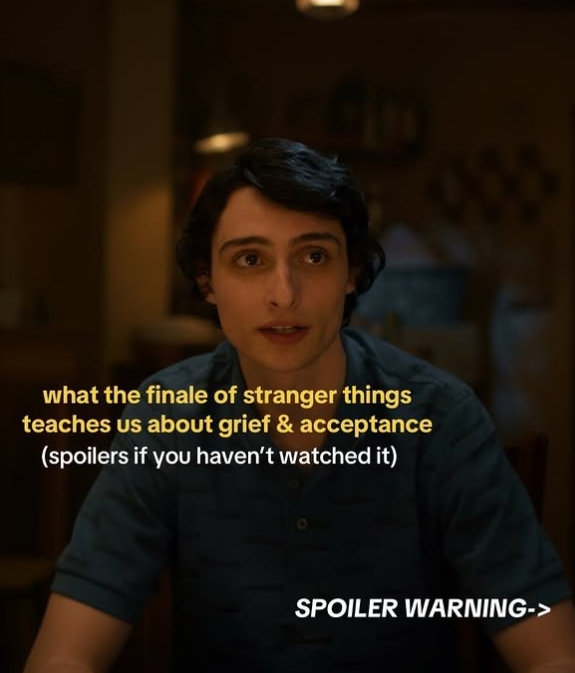
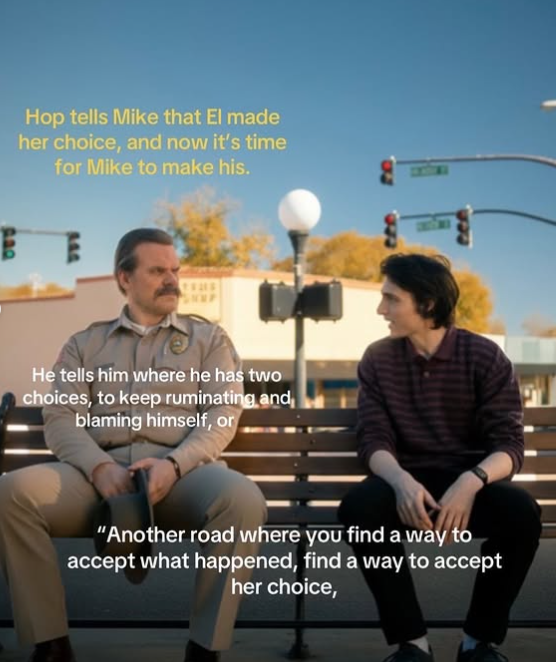
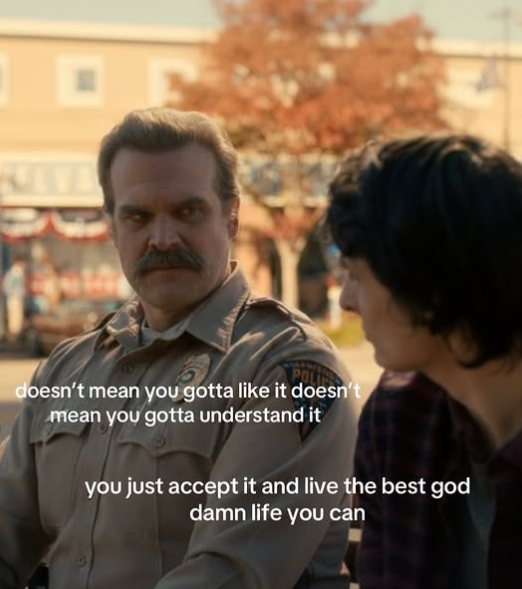
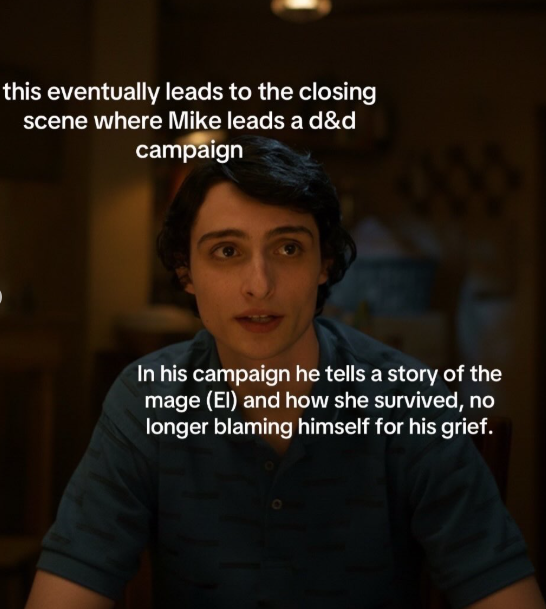
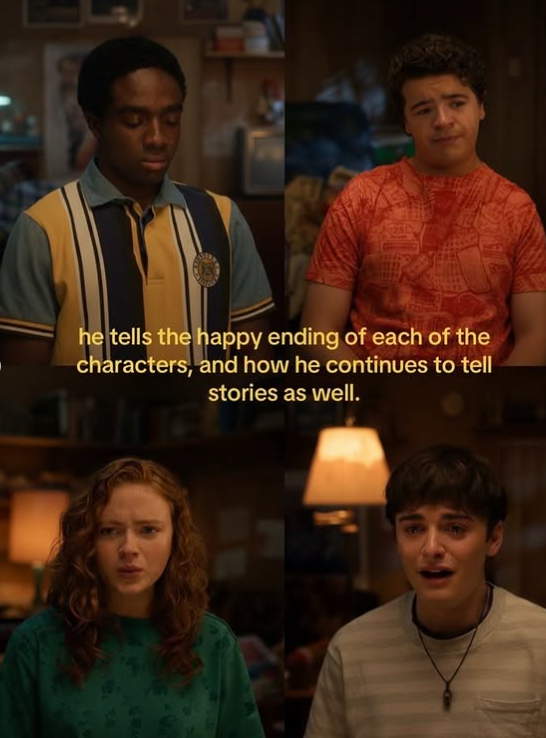
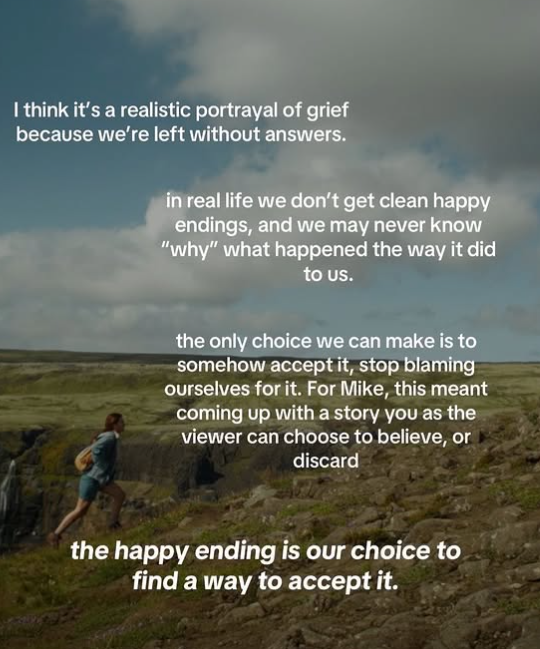
I came across an Instagram carousel that broke down this aspect of the finale so thoughtfully, and it really put words to what I was feeling. I really didn’t feel OK moving on after my friend’s death. Took me almost a year to fully process it and more than a year to accept it.
This post reminded me that grief and moving forward can coexist. Like Mike, I’m still learning how to accept what’s been lost while allowing myself to keep going — to grow, to change, and to live the best life I can, even while carrying those feelings with me.
The power of being seen
It's wild, yet sooo amazing, how many thousands, millions, of others are sincerely feeling how I feel about the end of Stranger Things.
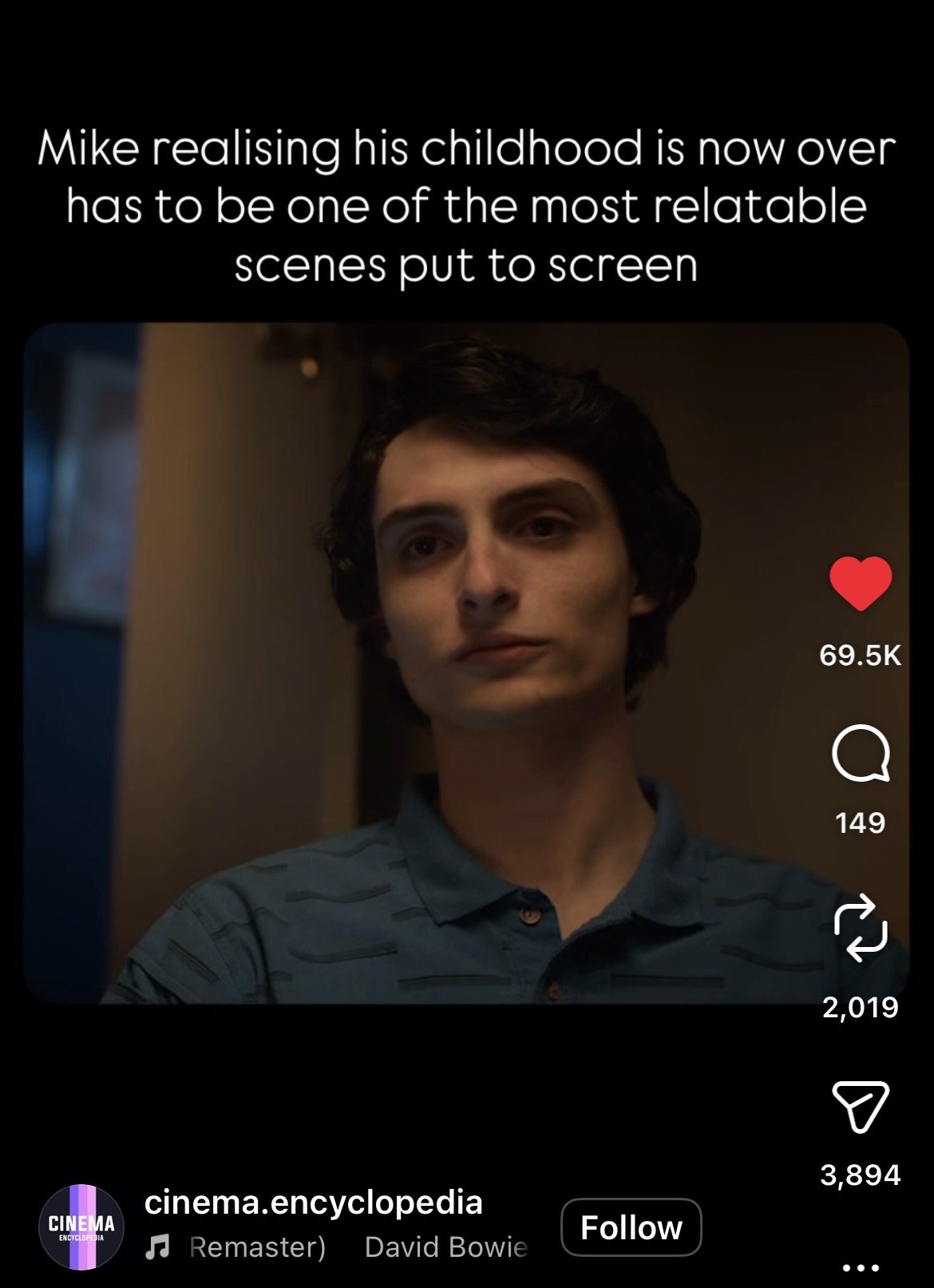
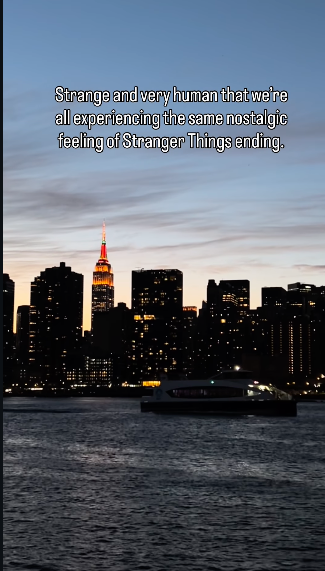
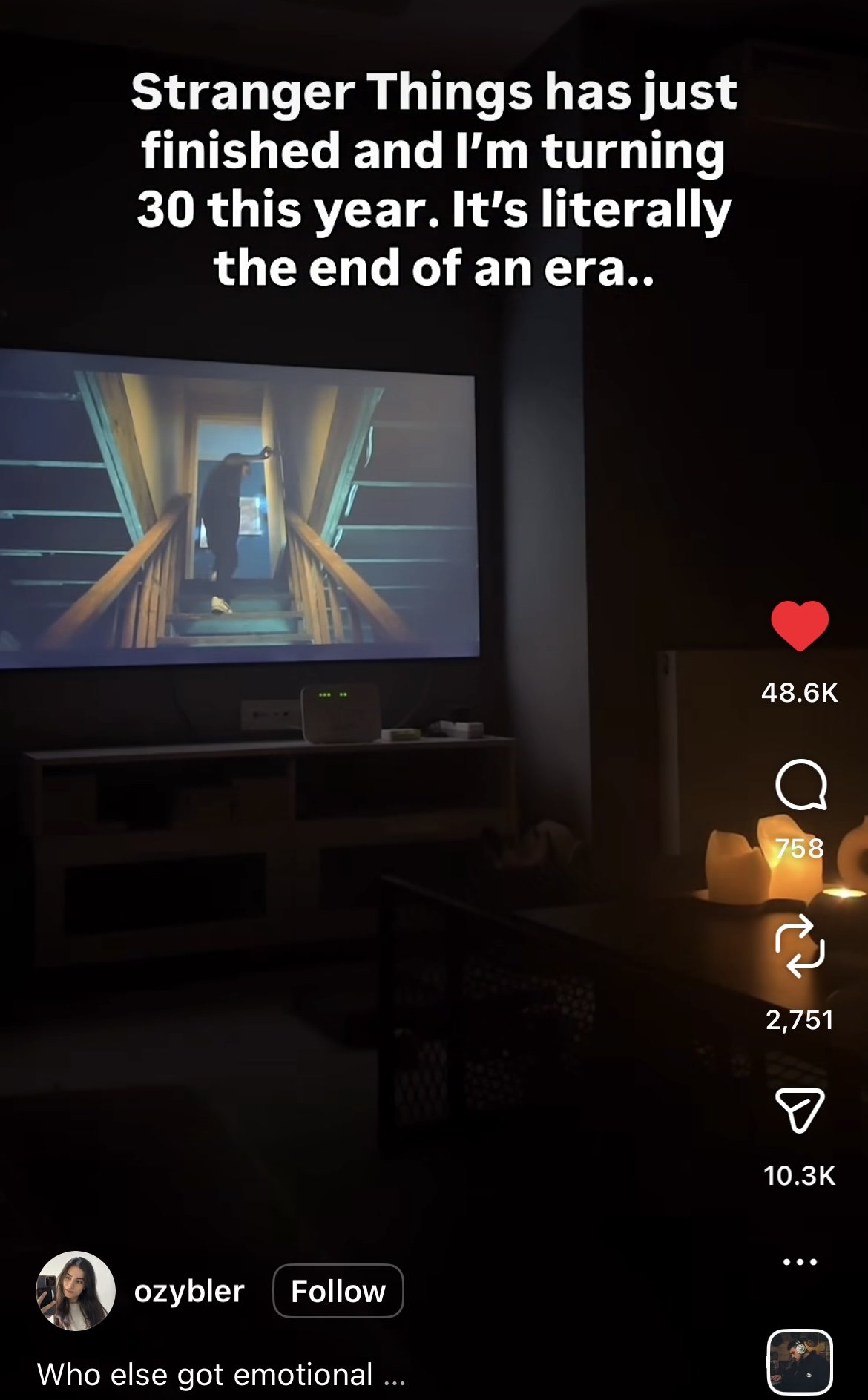
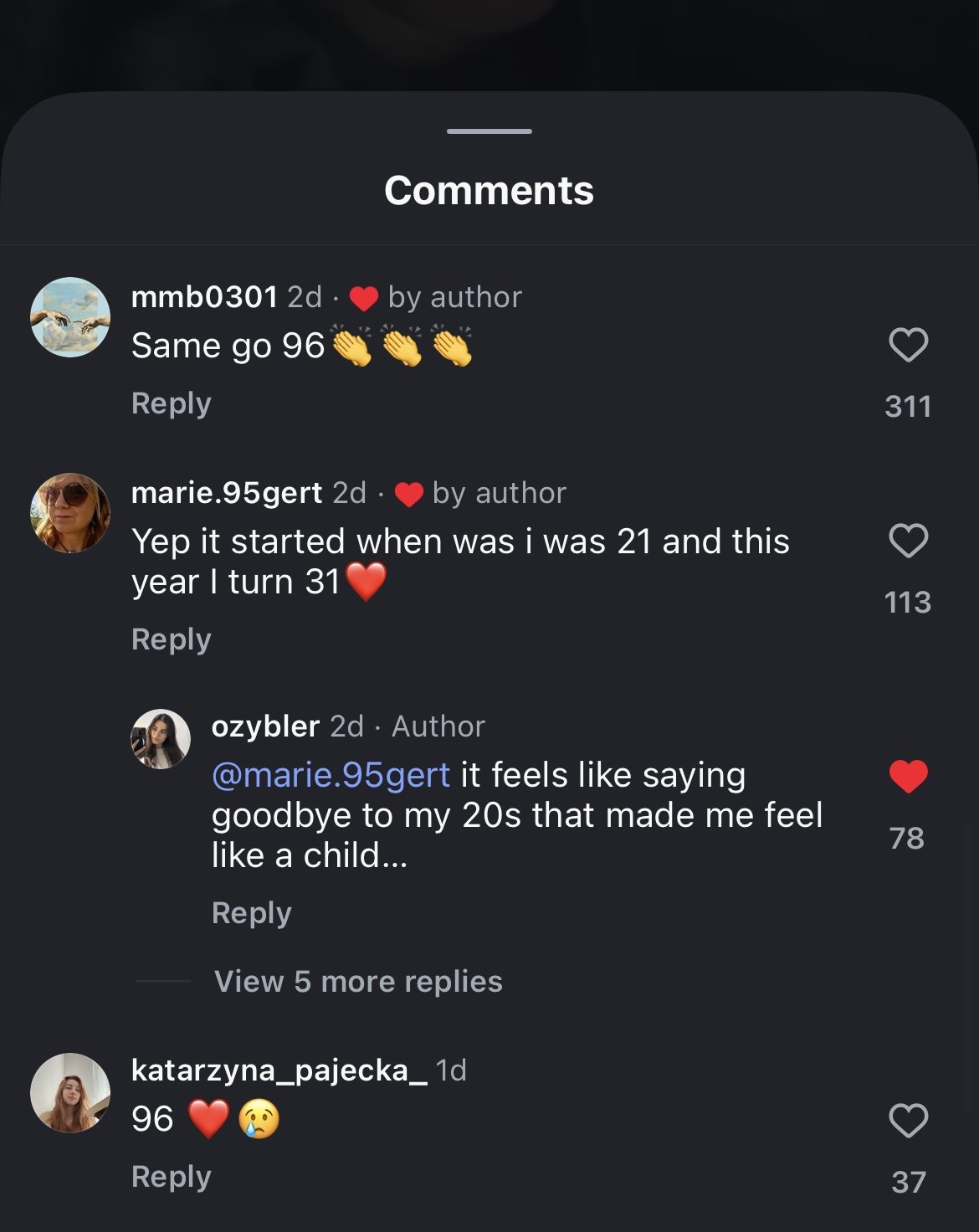
The amount of IG/TikTok reels on people experiencing Post Stranger Things Depression (PSTD) is unreal..I feel so seen and heard and not alone. My feelings just feel so VALIDATED, like thank you to all the other Stranger Things fans out there.
It’s especially comforting to hear psychologists validate our feelings and emphasize that it’s normal and human to feel like this. Many have said that it isn’t dramatic or silly. It’s parasocial attachment + nostalgia + life transitions + identity shifts + community all converging at once. Of course it hit hard.
GRIEF IS JUST LOVE.
And so many others resonated with the feeling of grief when you and your friends move on and start your new life after school. It’s hard.
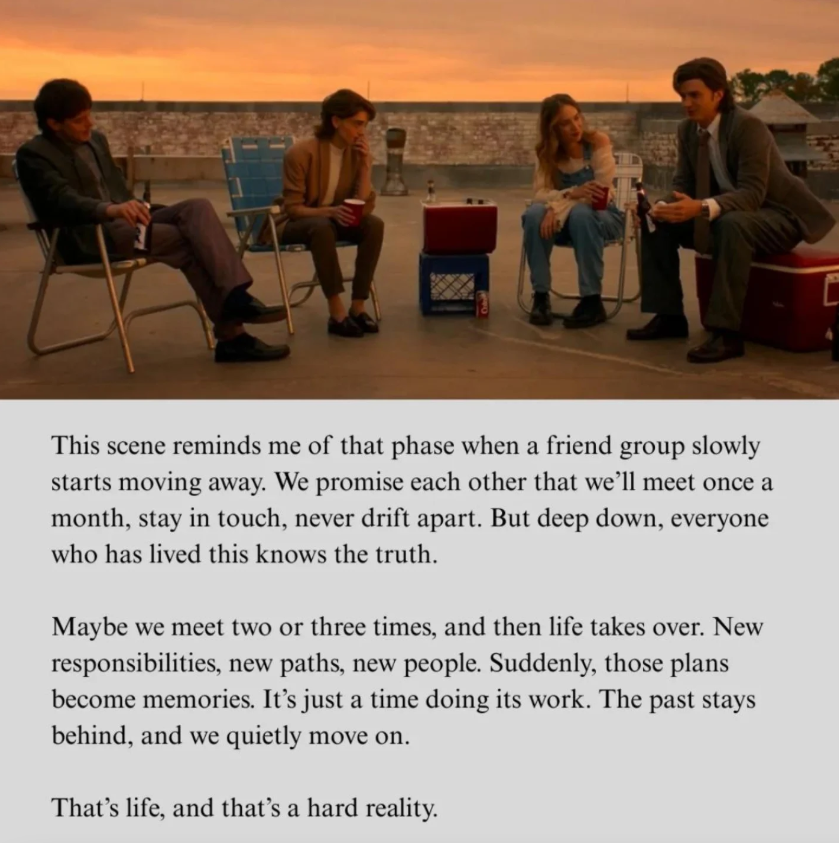
I love this IG comment: “It took me almost a decade to realize as you grow up you have to be deliberate with the time you spend with your friends. So I’m glad they are bringing awareness, life is going to go at you fast but the more deliberate you are with the time you make for those who truly get you, is what life is all about ❤️”
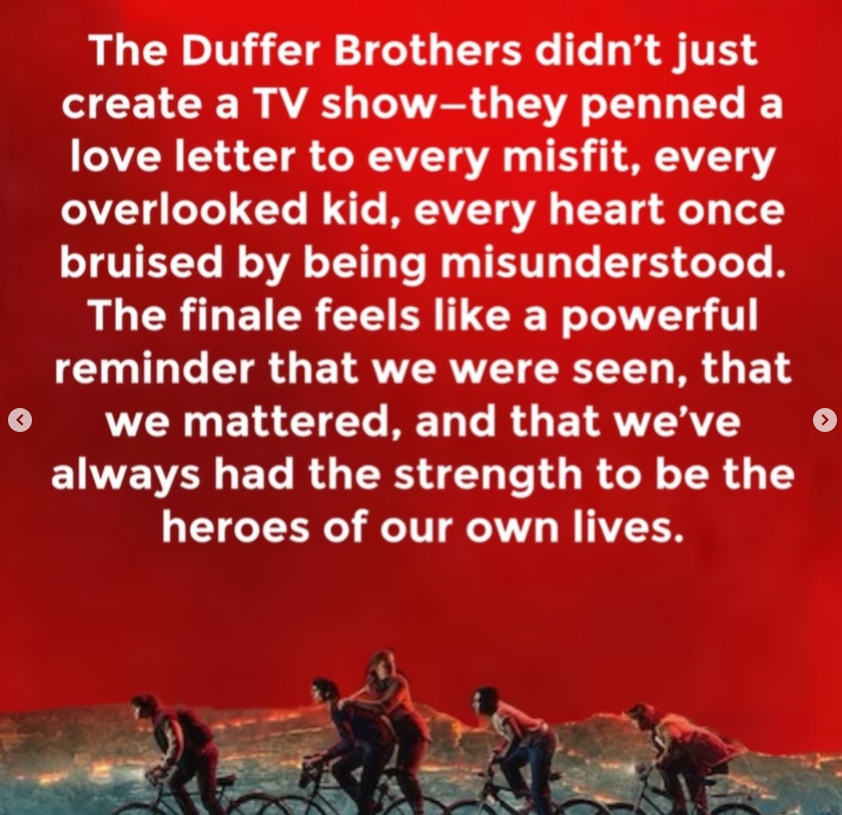
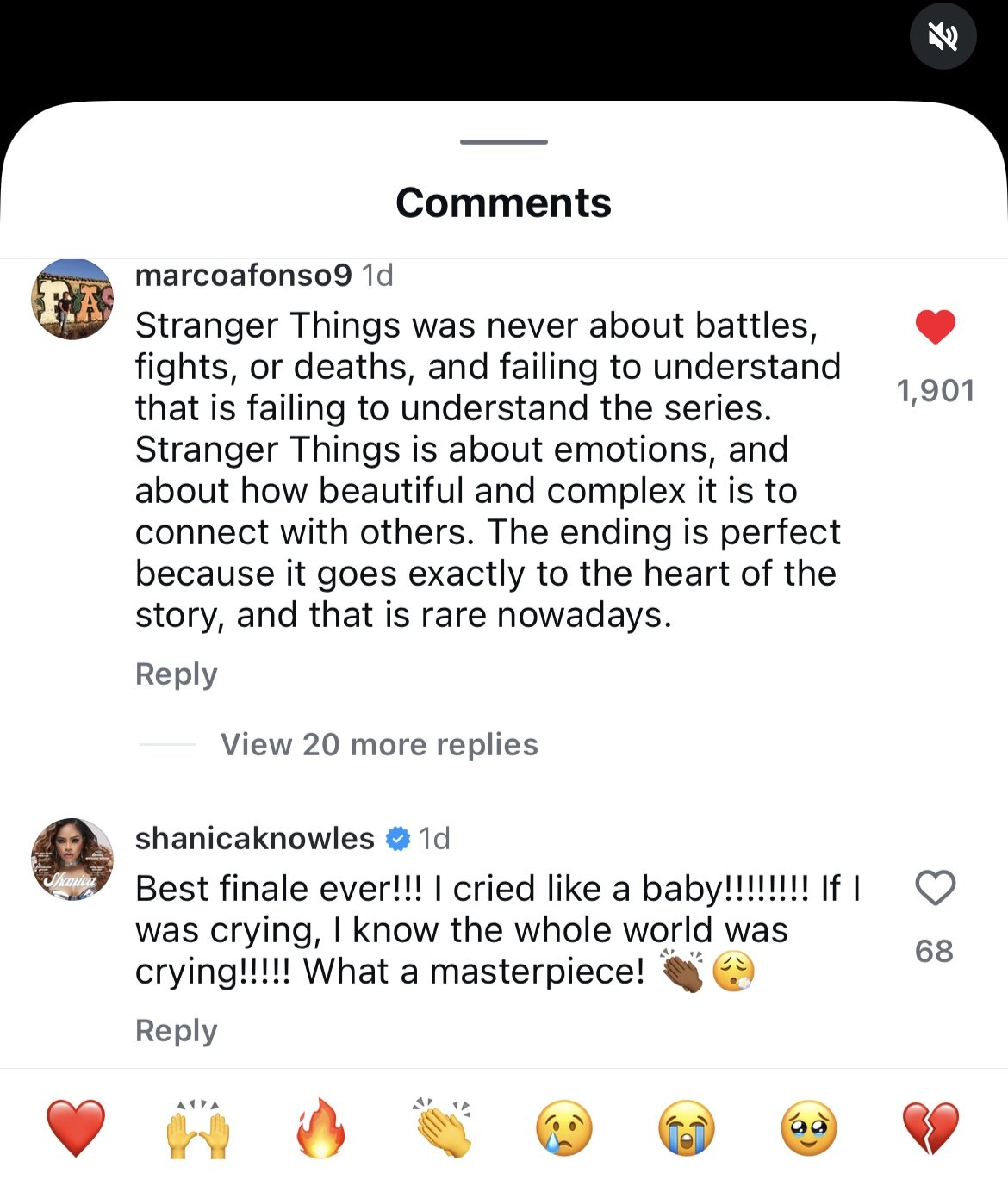
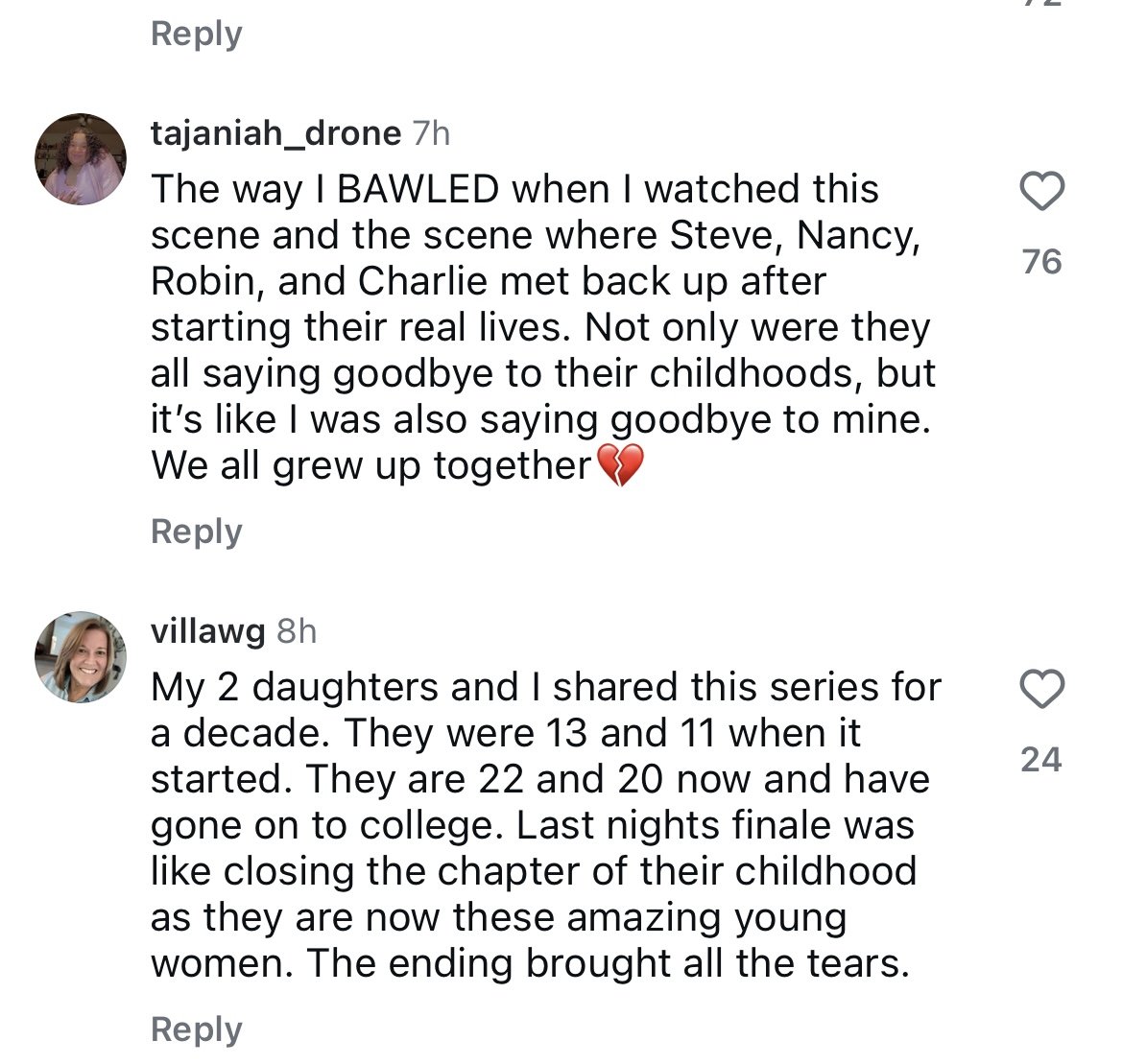
And I will leave some more of my favorite IG posts/comments below that perfectly encapsulate the feelings of grief and sadness after the end of Stranger Things, and just how much this show truly meant to millions of viewers worldwide.
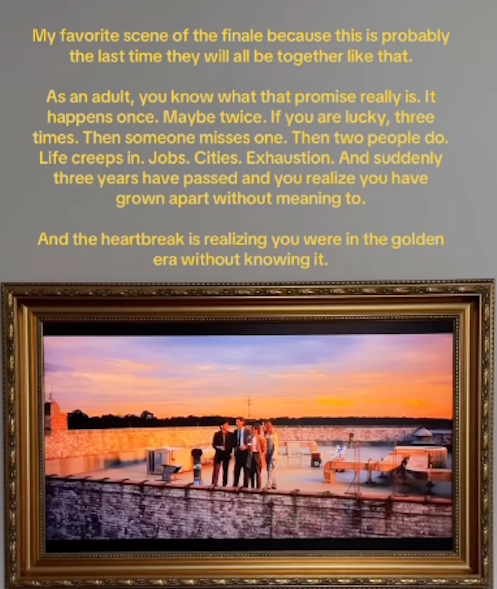
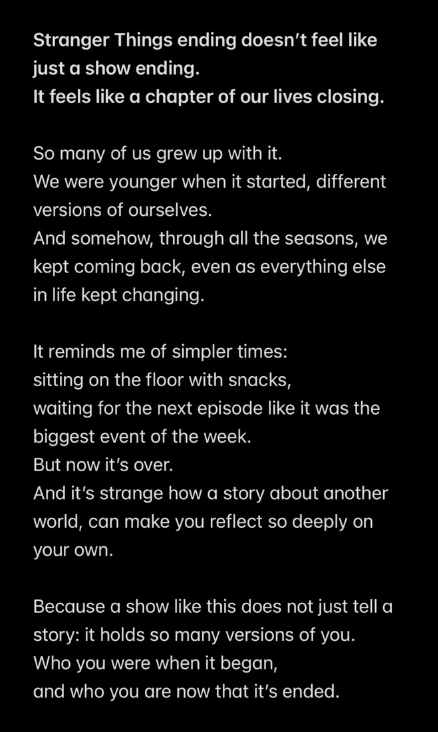
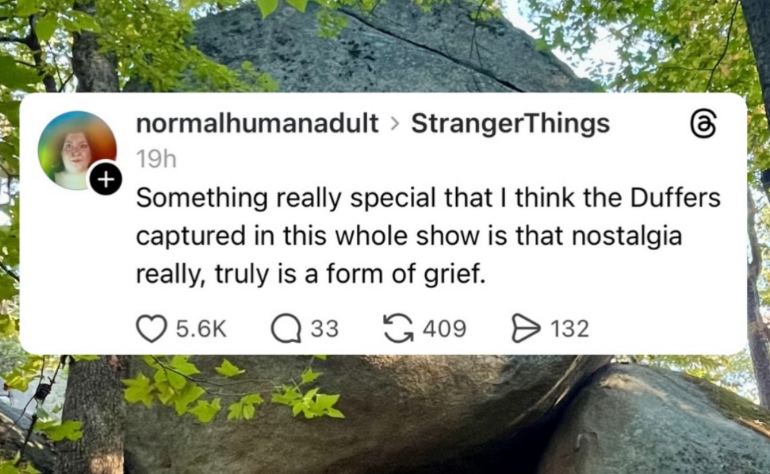
Onward: Over and Out
From the very first episode, Stranger Things pulled us into a world where friendship meant everything, where being different was a strength, and where courage was found in the most unexpected places. Those quiet moments of kids riding bikes beneath glowing streetlights — the laughter, the fear, and the tears — felt real, like memories pulled straight from our own lives. As the characters grew older, so did the story, carrying the weight of loss, sacrifice, and the painful truth that childhood doesn’t last forever.
Stranger Things captures more than just monsters and good versus evil. Beneath the Demogorgons, alternate dimensions, and flickering Christmas lights lies something deeply human: friendship, grief, and the aching transition from childhood to adulthood. It’s a story about growing up, holding on, and learning when to let go. About how friendship can save you, even when nothing else can. A reminder that sometimes the most extraordinary thing isn’t surviving monsters — but surviving the pain of growing up and still finding hope in the uknown.
Stranger Things reminded us of our first friendships, our first fears, and that unforgettable feeling of discovering something for the very first time. Saying goodbye now feels like closing a chapter of our own lives. The show may end, but the emotions, the nostalgia, and the bond we felt with Hawkins will stay with us forever. Stories don’t need to end on the screen — they live on in our hearts.
So yes, I’m grieving Stranger Things. But really, I’m learning how to say goodbye — and how to move forward without leaving myself behind.